

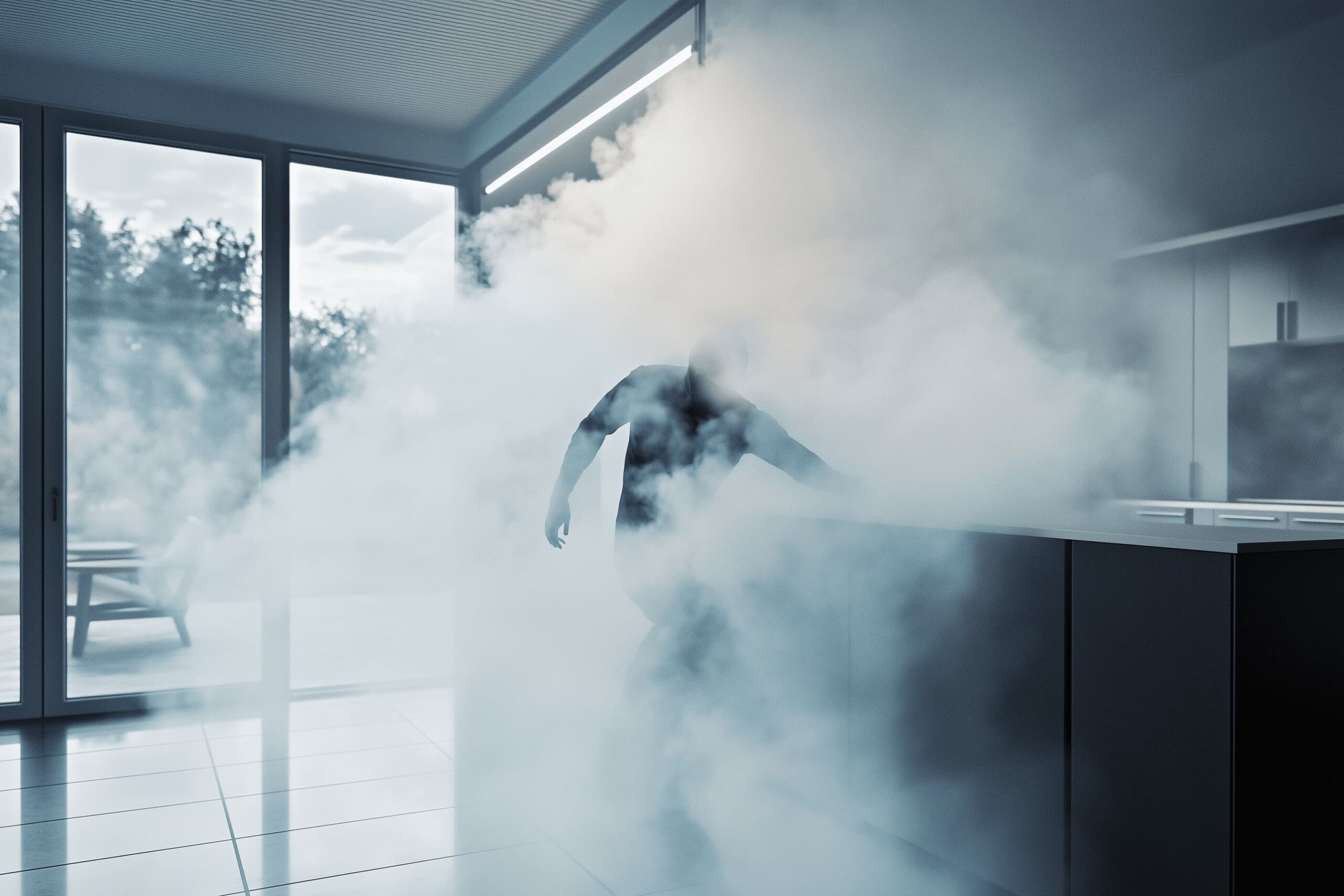
Installer un générateur de brouillard anti-intrusion, c’est d’abord une décision de sécurité. Mais beaucoup de professionnels se posent une question légitime : cet investissement peut-il aussi agir sur leur prime d’assurance multirisque professionnelle ? La réponse courte : Yes, in the vast majority of cases — à condition de bien documenter l’installation et de choisir un matériel certifié.
Voici ce que les compagnies d’assurance reconnaissent réellement, comment présenter votre dossier, et pourquoi les certifications Density font la différence dans cette démarche.
What insurers really look for
An insurer assesses the risk associated with your premises based on several criteria: the location, the nature of your business, the value of your stock, and the active protective measures in place. Un système d’alarme seul est devenu un standard minimal ; il ne génère plus nécessairement de réduction tarifaire.
Ce qui fait la différence aujourd’hui, c’est la active protection — c’est-à-dire un système capable de neutraliser physiquement l’intrus plutôt que de se contenter de le détecter. Les Density® fog generators fall squarely into this category. Unlike an alarm, they do not give a warning: they have a direct impact on the course of the burglary, en rendant le local inutilisable pour l’intrus en quelques secondes.
Pour qu’un assureur reconnaisse cet équipement, deux conditions sont généralement requises :
Equipment certification. Les assureurs qui valorisent les générateurs de brouillard dans leurs grilles tarifaires exigent des matériels certifiés. La gamme Density® (modèles 390 à 2400IP) est certifiée EN50131-8:2019 et NF&A2P version 2019 cyber. Ces certifications sont délivrées par des organismes indépendants accrédités, et elles constituent le seul langage commun entre les installateurs de sécurité et les services souscription des compagnies d’assurance.
L’installation par un professionnel qualifié. Un générateur posé sans installation documentée par un installateur formé n’a aucune valeur contractuelle vis-à-vis d’un assureur. Le réseau d’installateurs partenaires d’INNOV SÉCURITÉ délivre systématiquement un certificat d’installation, indispensable pour constituer votre dossier.
What practical impact will this have on the premium?
Il n’existe pas de barème officiel unique : chaque compagnie d’assurance applique sa propre grille. Ce que l’on observe en pratique :
Insurers specialising in high-risk businesses (jewellers, tobacconists, chemists, petrol stations) apply discounts ranging from 10% to 30% sur la partie vol/vandalisme de la prime multirisque, lorsque le local est équipé d’un générateur de brouillard certifié. Cette réduction est souvent cumulable avec les réductions pour alarme, vidéosurveillance et télésurveillance.
Certain specific contracts (for example, agreements with professional associations such as tobacconists) now include explicit clauses listing fog generators among the types of equipment that reduce the subsidy.
En résumé : la réduction de prime n’est pas automatique, mais elle est réelle pour les locaux à risque. La clé est de soumettre à votre assureur un dossier complet : fiche technique du modèle installé, certificats de conformité, attestation d’installation par un technicien qualifié.
La certification NF&A2P cyber : l’argument décisif
La certification NF&A2P version 2019 cyber est aujourd’hui la plus exigeante du marché. Elle couvre non seulement les performances physiques du générateur (densité, temps de saturation, non-toxicité), mais aussi sa résistance aux attaques numériques. En clair : un cambrioleur ne peut pas désactiver le système à distance en piratant la centrale d’alarme.
C’est un argument que les assureurs comprennent. Avec l’augmentation des cambriolages « préparés » (repérage préalable, neutralisation de l’alarme avant l’intrusion), les compagnies commencent à distinguer les systèmes cyber-sécurisés des systèmes classiques. Un Density 390 or 900 certifié NF&A2P cyber positionne votre local dans une catégorie de risque objectivement plus faible.
How should you submit the claim to your insurer?
Here is what you need to have ready before contacting your insurance company:
Le Certificate of Conformity to EN 50131-8:2019 and the certification form NF&A2P for your model. These documents are available on the Density Certifications and Warranties page or from your installer.
L’attestation d’installation signée par le technicien qualifié, avec la référence du modèle, la superficie couverte et la date d’installation.
Le annual maintenance contract si vous en avez souscrit un. Certains assureurs conditionnent le maintien de la réduction tarifaire à la preuve d’un entretien régulier.
Une fois ce dossier constitué, demandez à votre assureur un avenant à votre contrat actuel. Si votre compagnie ne reconnaît pas cet équipement malgré les certifications, c’est souvent le signe qu’elle n’est pas spécialisée dans les risques professionnels à forte sinistralité — et qu’une mise en concurrence s’impose.
Conclusion
Un générateur de brouillard Density ne remplace pas votre contrat d’assurance, mais il peut sérieusement en améliorer les conditions tarifaires. Les certifications EN50131-8 et NF&A2P cyber constituent le dossier technique que vos interlocuteurs assurance attendent. L’installation professionnelle documentée est la condition sine qua non pour que cet argument soit recevable.
Contact INNOV SÉCURITÉ pour obtenir l’ensemble des documents de certification nécessaires à votre démarche assurance, et pour être mis en relation avec un installateur partenaire dans votre région.