

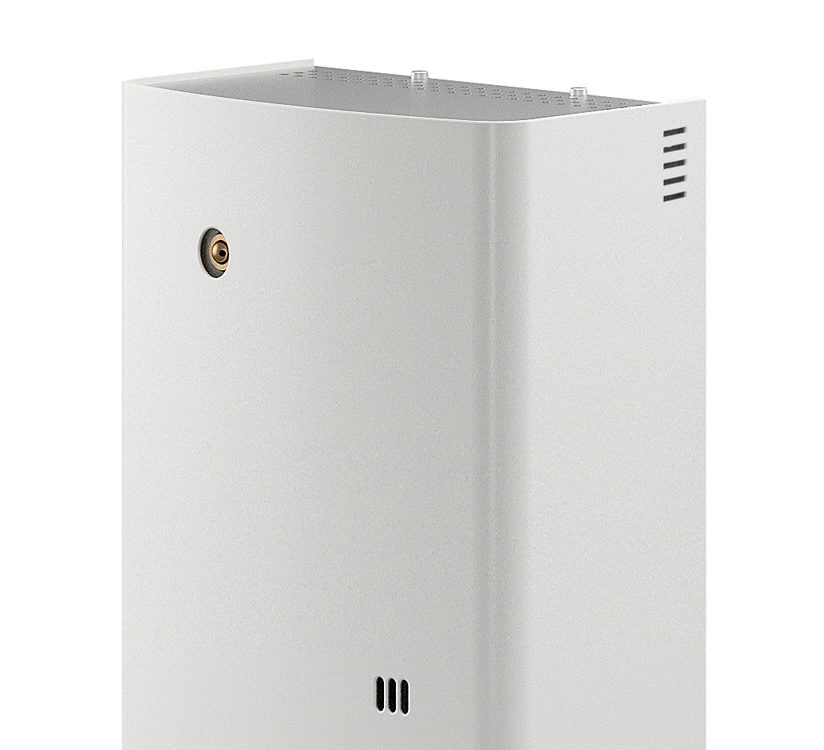
A anti-intrusion fog generator also known as «burglar fog» (BAC) is a security device used to protect different types of premises against attempted break-ins, and in particular burglaries.
But we're not, how an anti-intrusion fog generator works ? With more than 20 years of expertise in the installation and integration of fog generators, Density can help you understand the best way to use fog. operation of fog generators and their components.
How the anti-intrusion fog generator works
When an intrusion attempt is detected thanks to the fog generator sensors, soit le dispositif s’active automatiquement (système autonome), soit il nécessite une intervention humaine (déclenchement à distance) ou, alors, il envoie un signal ou plusieurs signaux à un système d’alarme avant d’enclencher la production de brouillard.
Ce dispositif dissuasif fonctionne à l’aide d’une batterie et d’une cartouche rechargeable contenant un liquide qui se transforme en vapeur. Le liquide de brouillard ressemble à de la fumée dense, mais c’est en réalité un mélange d’eau et de glycol qui est chauffé à une température très précise à l’aide d’un élément chauffant. Le operation of the anti-intrusion fog generator is therefore based on the principle of evaporation, which is made possible by a heating process.
In most cases, the anti-burglary fog spreads in less than 60 seconds. In fact, for areas of more than 2000 square metres and, depending on the model of anti-burglary fog generators, the fog production time will be just over one minute. .
Les composants essentiels d’un générateur de brouillard
To fully understand the operation of a fog generator, Let's take a look at its components.
- Le fog liquid. C’est un mélange à base de glycol et d’eau qui est contenu dans une cartouche ou dans un réservoir.
- Le microprocessor is responsible for triggering fog production. This component links the sensors to the alarm system and, depending on the model, can also send real-time data to a user interface.
- L’heating element, ou l’évaporateur, qui transforme le liquide en vapeur grâce à un chauffage à haute température (environ 300°). Doté de capteurs, l’élément chauffant agit lorsqu’il reçoit des signaux d’intrusion en temps réel ou via un système d’alarme. Le processus d’évaporation peut aussi être déclenché de manière manuelle.
- La pump communicates with the heating element of the burglar fog generator. It transfers the liquid to the heating element, then sprays the fog generated by the element through one or more nozzles. The pump always operates under pressure.
How is a fog generator triggered?
For optimum performance, the anti-intrusion fog generator is often connected to an alarm system (central alarm) or a remote surveillance system. However, there is another type of intruder fog generator that operates manually. The anti-burglary smoke generators with remote triggering need to be activated by a person using a manual control: remote control or button.
Automatic fog generators
Most fog generators are triggered automatically and immediately, via a remote surveillance system or an alarm control centre. They release an opaque white fog when sensors detect an intruder inside a building or contact with openings such as doors and windows. If a automatic trigger generator is connected to an alarm system with motion detection, it will immediately release fog when the sensors trigger the alarm.
Remote triggering of fog generators
A manual anti-burglary fog generator is activated manually by a remote surveillance operator or by the owner of the protected building. In addition to the remote control or box, a mobile application can also be used to activate this type of anti-intrusion device. Thanks to human intervention, this method of triggering the anti-intrusion fog generator adds a degree of security and a degree of flexibility, as it allows the situation to be assessed in real time.
See also: Why choose an anti-burglary fog as a protection system?